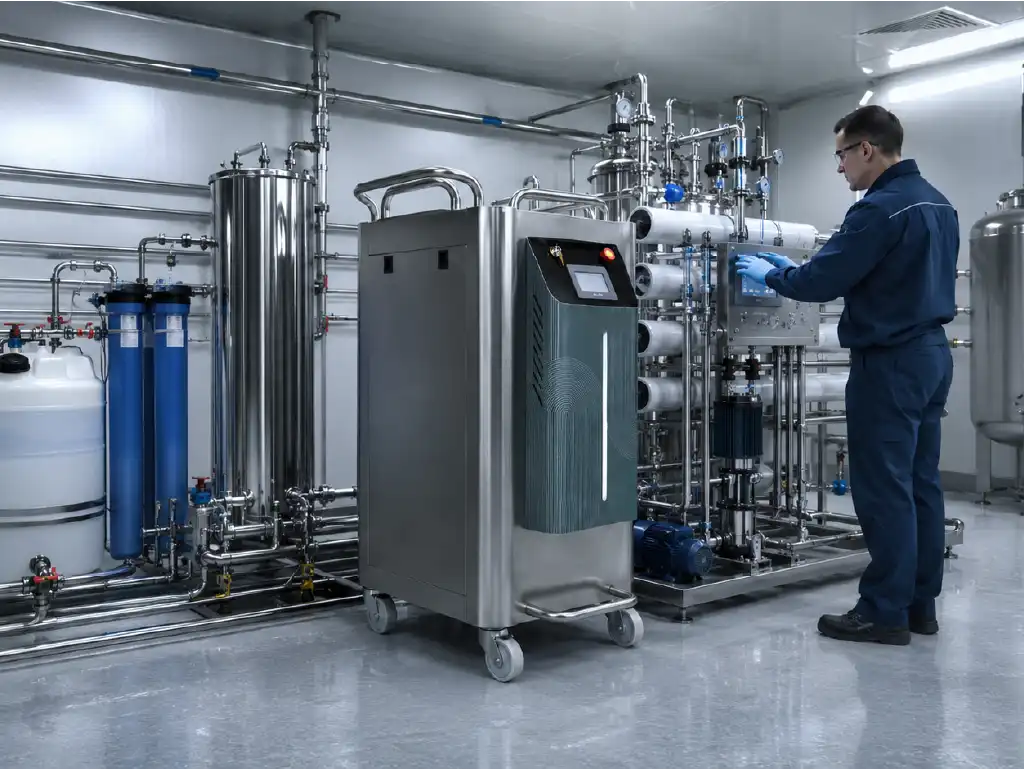
In hemodialysis centers, Endotoxin Filtration Performance Validation is not simply a technical check to confirm whether a filter is working. It is a critical quality process that supports patient safety, dialysis water purity, audit readiness, and long-term operational reliability. Endotoxin filters are designed to reduce the passage of lipopolysaccharide structures released from gram-negative bacteria; however, their real protection value can only be confirmed through correct sampling, validated testing, and consistent record-keeping.
In dialysis water systems, one of the most widely used approaches for monitoring endotoxin risk is the LAL test. The LAL test, hemodialysis water monitoring, endotoxin sampling, pyrogen test planning, and endotoxin control of dialysis water should not be considered separate tasks. They form a connected quality chain. If one link is weak, the final result may fail to reflect the actual safety condition of the system.
Why Is Validation Necessary in Endotoxin Filtration?
Endotoxin Filtration Performance Validation compares the expected performance of the filtration system with its actual performance under real field conditions. A filter may have strong technical specifications, but operating conditions can affect its long-term efficiency. Flow rate, water temperature, microbial load, distribution loop design, disinfection routine, filter age, and sampling technique can all influence the final test result.
For this reason, validation should not be limited to the commissioning phase. A newly installed system may perform well on the first test, but performance must remain stable during daily operation. Hemodialysis centers use large volumes of water every day, and even small changes in microbiological quality can become significant over time. A structured validation plan allows technical teams to detect early signs of risk before they affect treatment continuity.
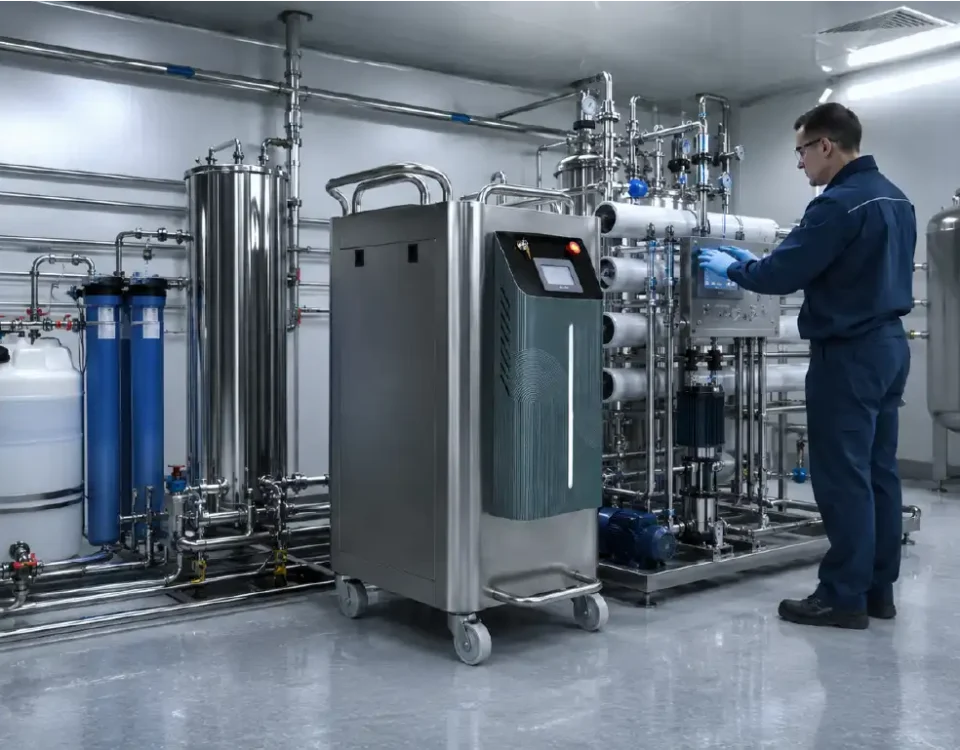
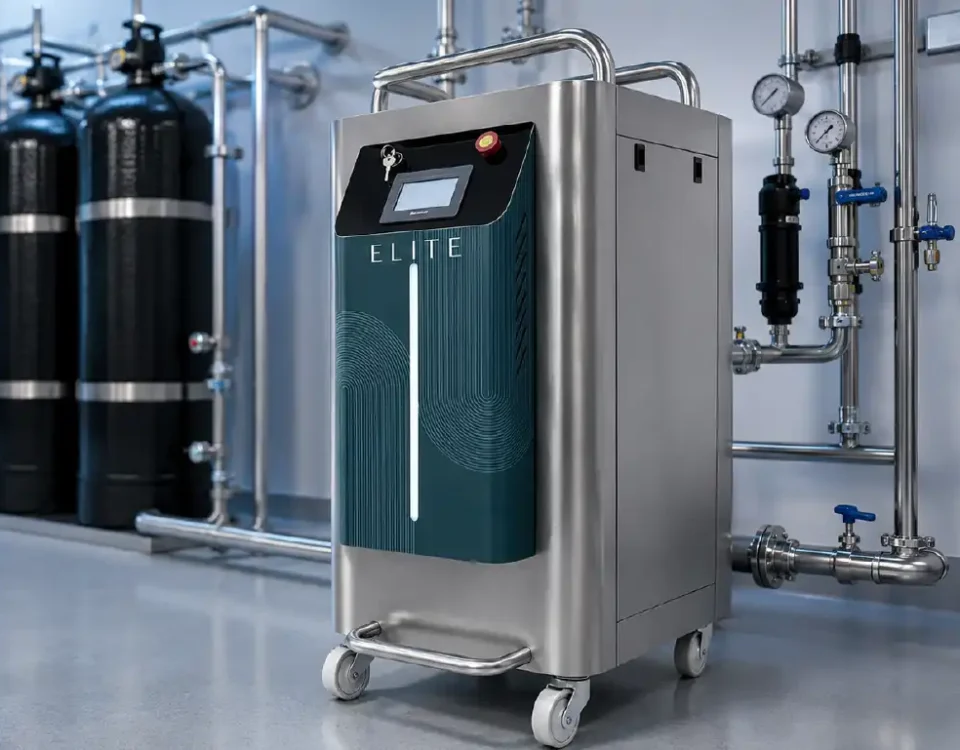
In hemodialysis water treatment, relying on a single barrier is not a safe approach. Pretreatment, reverse osmosis, the distribution loop, endotoxin filtration, hygienic piping, disinfection procedures, and periodic monitoring must be evaluated as a complete system. Reinmeer Hemodialysis Water Treatment Systems supports this approach with project-based assessment, technical analysis, and system solutions designed according to the capacity, infrastructure, and clinical needs of each facility.
The Relationship Between Filtration Performance and Patient Safety
Endotoxins are pyrogenic substances associated with the outer membrane of gram-negative bacteria. They may remain in water even when the water appears visually clear and chemically acceptable. In hemodialysis, the patient’s blood does not directly mix with water, but dialysate quality depends heavily on the quality of the water used in its preparation. Because patients are repeatedly exposed to large dialysate volumes, endotoxin control becomes a high-priority safety parameter.
When filtration performance begins to decline, the warning signs may not be obvious. Conductivity may still be within range, the system may continue producing water, and the dialysis machines may operate normally. However, biofilm formation, insufficient disinfection, or filter overload can increase endotoxin risk. This is why endotoxin filtration systems should be assessed not only by installation quality but also by measurable and repeatable validation results.
The purpose of Endotoxin Filtration Performance Validation is to confirm that the system is doing what it is expected to do under real operating conditions. It helps answer practical questions: Is the filter retaining endotoxin effectively? Is the risk coming from the RO outlet, the loop, the return line, or the point of use? Is the current disinfection program sufficient? Is the system stable enough for continuous clinical operation?
The U.S. Food and Drug Administration’s guidance on pyrogen and endotoxins testing explains current thinking on testing recommendations and acceptance criteria related to bacterial endotoxins and pyrogen testing. It also refers to fundamental principles of gel clot, photometric, and kinetic test methods. In sensitive healthcare systems, this reinforces the importance of validated testing methods, correct sample handling, and documented quality decisions. The official FDA guidance can be reviewed here: FDA Pyrogen and Endotoxins Testing Guidance.
Monitoring, Record-Keeping, and Sustainable Quality Management
Validation also plays an important role in monitoring and audit preparation. In healthcare environments, a test result is only meaningful when it is supported by proper documentation. The sampling date, sample point, responsible person, test method, laboratory report, limit value, corrective action, and follow-up result should all be traceable. Without this structure, it becomes difficult to prove that the system is being managed consistently.
Sustainable quality management depends on trend monitoring rather than isolated results. A single compliant result does not guarantee future stability. For example, if endotoxin values gradually move closer to the warning level over several months, this may indicate a developing risk even before the limit is exceeded. In this case, early investigation can prevent system downtime, emergency filter replacement, or clinical disruption.
Endotoxin Filtration Performance Validation helps transform routine testing into a preventive maintenance tool. Instead of waiting for a problem to appear, the facility can use test data to make informed decisions. This may include changing the disinfection schedule, replacing filters before performance loss becomes critical, reviewing loop hydraulics, or increasing sampling frequency after system modification.
Control Area
What Should Be Evaluated?
Why It Matters
Sampling point
RO outlet, post-filter line, loop return, and points of use
Helps identify where endotoxin risk develops
LAL test
Measured endotoxin value compared with defined limits
Provides measurable evidence of filtration performance
Record-keeping
Date, result, method, responsible staff, and action taken
Supports audit readiness and traceability
Trend tracking
Changes in results over time
Allows early intervention before limit exceedance
Corrective action
Disinfection, filter replacement, retesting, and revalidation
Confirms that the system is safe to continue operation
The LAL Test and Sampling Process
The LAL test is a sensitive method used to detect bacterial endotoxins. In hemodialysis water systems, it is commonly used as part of endotoxin control of dialysis water. However, the accuracy of the result depends not only on the laboratory method but also on the entire sampling process. A well-performed test can lose its reliability if the sample is collected from the wrong point, stored incorrectly, or contaminated during collection.
Before starting a validation program, the purpose of testing should be clearly defined. Is the facility checking a newly installed filter? Is it monitoring routine performance? Is it investigating a high endotoxin result? Is it confirming safe operation after disinfection? Each purpose may require a different sampling map, test frequency, and interpretation strategy.
Endotoxin Filtration Performance Validation should therefore begin with a written sampling plan. This plan should define sampling points, sample containers, flushing method, collection technique, transport conditions, test method, acceptance criteria, responsible staff, and reporting procedure. A clear plan reduces variation and helps different team members follow the same quality process.
Sampling Points and Contamination Risks
Sampling points must represent the critical areas of the water system. Taking a sample only from the RO outlet may not be enough because endotoxin risk can increase after the RO stage. Distribution loops, storage tanks, dead legs, low-flow sections, and points of use can all create conditions that support microbial growth or biofilm accumulation. For this reason, sampling should reflect the real hydraulic structure of the facility.
Common sampling points include the raw water inlet, post-pretreatment line, RO outlet, post-endotoxin filter line, distribution loop return, and selected points of use near dialysis machines. In some facilities, additional sampling may be required after maintenance, construction work, disinfection failure, long shutdown periods, or changes in water source quality.
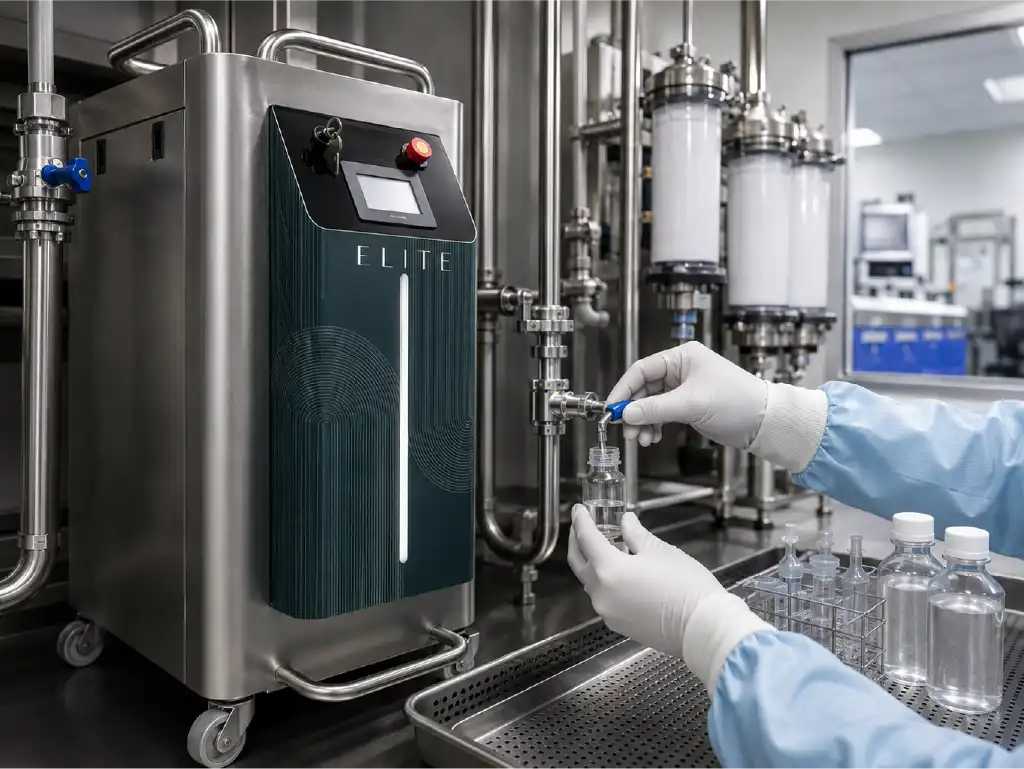
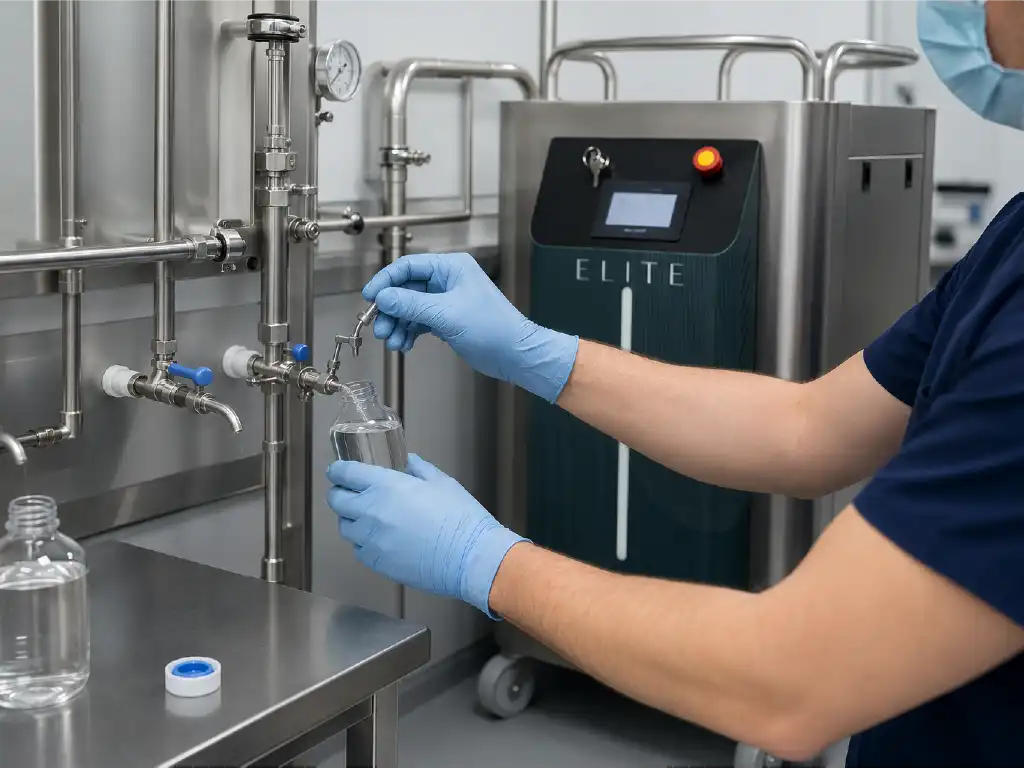
Endotoxin sampling must be performed carefully. The sample port should be suitable for hygienic collection, the outlet should be flushed according to the defined procedure, and the container should be endotoxin-free. A standard sterile container is not always enough for endotoxin testing. Contact with the cap, splashing, delayed transport, warm storage conditions, or unclean sampling ports can lead to misleading results.
Distribution loop design also affects sampling strategy. If water stagnates in certain branches, microbial load may rise locally. If this area is not included in the sampling plan, the facility may receive acceptable results while an actual risk remains hidden. The same applies to points of use that are rarely operated or have poor flushing habits. In these cases, hygienic piping systems and proper loop design can make long-term endotoxin control more reliable.
Expert note: Sampling is not a minor step before laboratory analysis. It is one of the most important parts of the validation process. If two samples taken from the same system produce very different results, the sampling point, container type, flushing method, transport conditions, and staff technique should be reviewed before making a final technical decision.
Test Frequency, Record-Keeping System, and Result Tracking
The ideal test frequency depends on the risk level of the facility. New installations, recent filter replacement, post-disinfection recommissioning, high patient capacity, previous out-of-limit results, variable raw water quality, and changes in the distribution loop may require closer monitoring. Routine frequency should be defined according to applicable standards, local requirements, laboratory recommendations, and the facility’s internal quality procedures.
For Endotoxin Filtration Performance Validation, record-keeping should go beyond a simple “pass” or “fail” note. A strong record includes the sample point, sample date and time, test method, measured value, unit, acceptance limit, laboratory report number, interpretation, corrective action, and follow-up result. This level of detail helps the technical team understand whether a result is an isolated event or part of a developing trend.
Result tracking should be reviewed periodically. If the values remain consistently low, the current control strategy may be considered stable, provided that the system conditions have not changed. If the values begin to rise, even within acceptable limits, the team should investigate possible causes. These may include reduced filter performance, insufficient disinfection, microbial growth in the loop, improper sampling, or changes in inlet water quality.
Digital record-keeping can improve this process. Trend charts, maintenance logs, filter replacement dates, disinfection records, and laboratory results should be evaluated together. Reinmeer Hemodialysis Water Treatment Systems focuses not only on equipment supply but also on system continuity, technical support, and long-term performance management. For facilities that need structured maintenance support, the technical support process can help create a more disciplined monitoring approach.
What Should Be Done If Results Fall Outside the Limits?
If endotoxin results fall outside the defined limits, the response should be systematic and documented. A high result may indicate real contamination, but it may also be related to sampling error, transport conditions, container suitability, or laboratory handling. Therefore, the first step should be confirmation and controlled investigation, not an immediate assumption.
Endotoxin Filtration Performance Validation becomes especially important when a result is out of specification. The goal is not only to reduce the number temporarily. The main objective is to identify the source, correct the root cause, confirm the effectiveness of the action, and prevent recurrence. This requires cooperation between the technical team, clinical management, quality department, and, when necessary, the system supplier.
In clinical environments, decision-making should always consider patient safety. If a high result suggests a direct risk, the facility should follow its internal safety procedure and applicable local requirements. Depending on the severity of the deviation, this may include temporary restriction of use, additional sampling, emergency disinfection, filter replacement, or expert technical assessment.
Source Identification and System Control Steps
Source identification begins with understanding where the high result was detected. If the RO outlet is within range but the loop return is high, the distribution loop may be the source. If the filter inlet is high but the filter outlet remains low, the filter may still be performing effectively while the upstream system needs attention. If both inlet and outlet are high, filter overload, incorrect installation, bypass risk, or membrane failure should be considered.
A comparative sampling approach is useful during investigation. Samples may be taken from the RO outlet, filter inlet, filter outlet, loop return, tank outlet, and selected points of use. This helps map the movement of endotoxin risk within the system. The investigation should also include pressure drop, flow rate, recent maintenance activities, disinfection records, filter age, valve positions, and any recent changes in the facility.
Pretreatment should not be ignored. Weak sediment control, organic load, poor chlorine management, or hardness-related scaling can indirectly affect microbial stability in later stages. The RO system may also be exposed to stress if pretreatment is not properly maintained. For this reason, hemodialysis water purification systems should be considered as a complete treatment chain rather than a group of separate components.
Confirm sample collection method, container suitability, and transport conditions.
Repeat sampling from the same point and from related upstream and downstream points.
Compare pre-filter and post-filter endotoxin values.
Review RO performance, distribution loop hygiene, and disinfection records.
Check flow rate, pressure difference, filter service life, and possible bypass paths.
Document every action and perform follow-up testing after corrective measures.
Filter Replacement, Disinfection, and Revalidation
If the investigation indicates that filter performance has decreased, filter replacement should be planned according to technical evaluation. However, replacing the filter alone may not solve the problem if the distribution loop or upstream system continues to carry a high microbial or endotoxin load. In such cases, the new filter may be exposed to the same stress and may lose performance earlier than expected.
Disinfection should be selected according to system design, material compatibility, operating procedure, and manufacturer recommendations. Chemical concentration, contact time, temperature, flushing, and verification steps should be controlled carefully. After disinfection, the system should not be returned to normal operation based only on the fact that the procedure was performed. It should be verified through post-action testing.
Revalidation confirms whether corrective actions were effective. This may include LAL test results, repeated sampling at critical points, microbiological testing where required, and review of system parameters. If values return to acceptable levels and remain stable, the system can be considered controlled according to the facility’s quality procedure. If the problem continues, the root cause analysis should be expanded.
In a properly managed Endotoxin Filtration Performance Validation process, an out-of-limit result becomes a structured improvement opportunity. It allows the facility to strengthen its monitoring plan, improve technical discipline, revise maintenance intervals, and reduce the possibility of recurrence. This is where the experience of an expert engineering team becomes valuable. Reinmeer Hemodialysis Water Treatment Systems provides project-based support for system design, filter integration, performance monitoring, and long-term water safety management.
Frequently Asked Questions
How is endotoxin filter performance monitored?
Endotoxin filter performance is monitored by comparing samples taken before and after the filter, reviewing LAL test results, checking pressure difference, monitoring flow rate, and tracking results over time. For reliable Endotoxin Filtration Performance Validation, sampling points must be correctly selected and all results must be documented with traceable records.
What is the purpose of the LAL test?
The LAL test is used to detect bacterial endotoxins in a water or product sample. In hemodialysis water systems, it helps evaluate pyrogenic risk and supports endotoxin control of dialysis water. The test result should always be interpreted together with sampling quality, system condition, and defined acceptance limits.
Where should samples be taken from the dialysis water system?
Samples should be taken from points that represent the critical areas of the system. These may include the RO outlet, endotoxin filter inlet and outlet, loop return, tank outlet, and selected points of use. The exact endotoxin sampling plan should be prepared according to system design, water flow, clinical use, and risk level.
What should be done if endotoxin levels are high?
If endotoxin levels are high, the facility should first verify the sampling process and repeat testing from critical points. Then, filter performance, disinfection records, RO output, distribution loop hygiene, and possible contamination sources should be reviewed. Corrective actions may include disinfection, filter replacement, line flushing, and revalidation.
Is a pyrogen test the same as an LAL test?
A pyrogen test is a broader term used to evaluate substances that may cause fever. The LAL test is a specific method used to detect bacterial endotoxins. In dialysis water monitoring, the LAL test is commonly used as part of endotoxin risk assessment and filtration performance validation.
Validate Your Endotoxin Filtration Performance with Confidence
Reliable dialysis water safety depends on correct system design, proper equipment selection, disciplined sampling, validated testing, and long-term technical monitoring. Reinmeer Hemodialysis Water Treatment Systems evaluates each project according to facility capacity, infrastructure, patient safety requirements, and field conditions. If your center needs a stronger approach to Endotoxin Filtration Performance Validation, expert support can help you define sampling points, interpret LAL test results, plan corrective actions, and improve system reliability.
The goal is not only to achieve a compliant test result, but to create a sustainable quality structure that supports safe operation every day. To request information, technical assessment, project-based consultancy, or a tailored filtration solution for your hemodialysis facility, visit Reinmeer Hemodialysis Water Treatment Systems and take the next step toward controlled, documented, and reliable dialysis water management.