

Dialysis Water Systems: Why is Pre-treatment Vital?
June 10, 2026
Performance Validation in Endotoxin Filtration: The LAL Test and Sampling Guide
June 20, 2026The correct selection of an RO system in a dialysis center is not based only on device capacity or the number of beds. The most critical starting point of the design is the accurate interpretation of hemodialysis raw water analysis results. This is because the conductivity, TDS value, hardness, iron, manganese, chlorine, chloramine, and organic load levels of the incoming water directly affect the pretreatment equipment, membrane configuration, Single Pass or Double Pass decision, and long-term operational safety.
Hemodialysis water requires a much more sensitive evaluation than standard drinking water. During treatment, the patient is indirectly exposed to dialysate prepared with large volumes of water. The CDC resource on water use in dialysis emphasizes that hemodialysis patients may be exposed to hundreds of liters of water per week and that water safety is critical for patient health. Therefore, reliable references such as the CDC resource on dialysis water safety show that water quality is not only a technical issue but also a clinical safety matter. At this point, hemodialysis raw water analysis is the core data that brings patient safety and engineering design together.
In this article, we explain which parameters should be reviewed in a hemodialysis raw water analysis report, how these data shape the pretreatment plan, and how they are used in project-based design decisions for Reinmeer Hemodialysis water treatment systems.
How Does Raw Water Analysis Affect System Design?
Hemodialysis raw water analysis acts as a technical roadmap in system design. An RO system selected without analysis may appear to work during initial installation, but it can quickly face problems such as membrane fouling, conductivity fluctuations, chlorine leakage, scaling caused by hardness, or microbiological risks. For this reason, dialysis water analysis is not the final step of the purchasing process; it is the first step of engineering design.
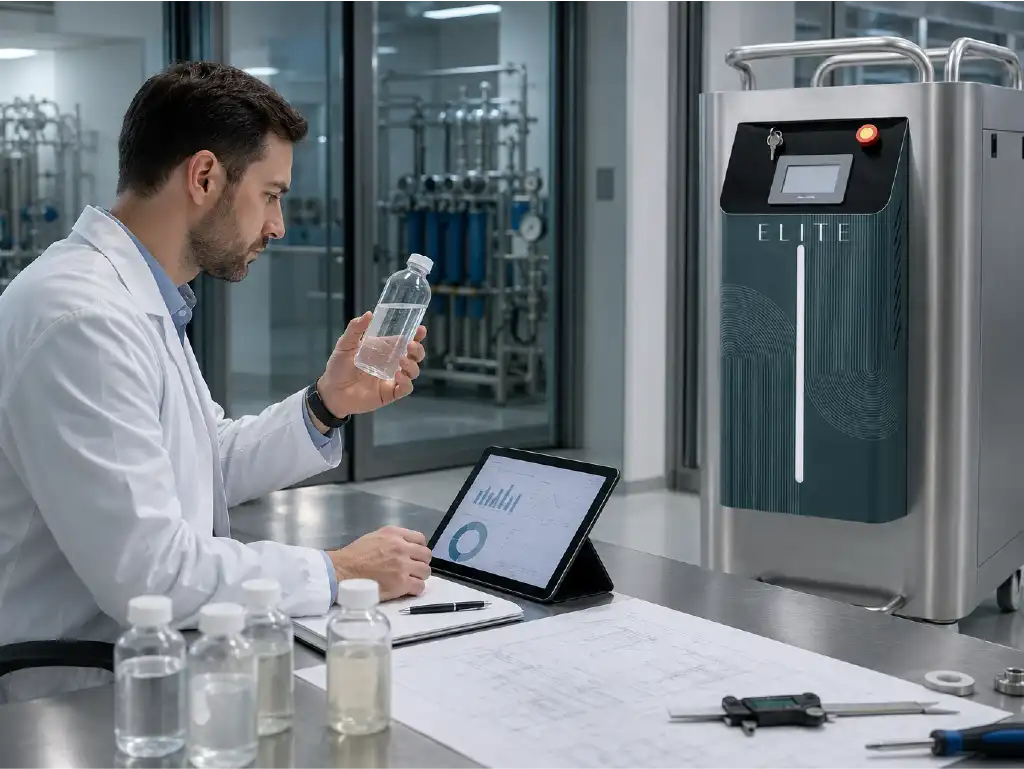
A raw water report does not only answer the question “Is the water clean?” It shows how much load the water will place on RO membranes, what capacity the activated carbon bed should have, how often the softener should regenerate, what level of pre-filtration is needed, and whether a double-pass treatment approach is required. This approach becomes even more important in hospitals, private dialysis centers, intensive-care-connected units, and facilities using variable water sources.
Since Reinmeer Hemodialysis water treatment systems are configured according to field conditions, raw water data are directly reflected in the system architecture. A center using municipal water and a center using well water should not be evaluated with the same RO design. Likewise, a source with low TDS but high organic load and a source containing high hardness and iron may require completely different pretreatment strategies.
The meaning of conductivity, TDS, and hardness values
Conductivity indicates the electrical conductivity capacity of dissolved ions in water. When water analysis for an RO system is performed, conductivity is one of the main indicators used to understand the mineral load that the membrane will face. TDS refers to the total dissolved solids in water and is usually evaluated together with conductivity. As TDS increases, the osmotic pressure on the membrane rises, the system’s energy requirement may change, and maintaining stable product water quality requires more careful design.
Hardness indicates the amount of calcium and magnesium ions in water. Hardness control is critical in hemodialysis pretreatment design because high hardness can cause scaling and performance loss on membrane surfaces. Therefore, conductivity TDS hardness control is not merely a numerical section in a laboratory report; it is a decision area that directly affects the system’s maintenance interval, chemical consumption, membrane life, and operating cost.
| Parameter | What It Indicates | Effect on Design |
|---|---|---|
| Conductivity | Shows the density of dissolved ions. | Provides data for the RO stage, monitoring sensors, and alarm limits. |
| TDS | Represents the amount of total dissolved solids. | Important in Single Pass or Double Pass evaluation. |
| Hardness | Shows calcium and magnesium load. | Determines softener capacity and regeneration planning. |
| Iron and manganese | Show oxidizable metal load. | May increase the need for sand filtration, oxidation, or special filtration. |
| Chlorine and chloramine | Show disinfection residuals. | Affect activated carbon capacity and safety monitoring planning. |
When these data are interpreted together, hemodialysis raw water analysis gains its real value. Selecting a system based on a single parameter can be misleading. For example, the TDS value may be moderate, but if hardness is high, a strong softening unit is required to protect the membrane. Similarly, even if conductivity appears acceptable, activated carbon design should not be left insufficient if there is a chloramine risk.
Iron, manganese, chlorine, and organic load risks
Iron and manganese are common risks, especially in facilities using well water. These metals can oxidize and form deposits in filter beds, pipelines, and membrane surfaces. Over time, this may lead to reduced flow, increased pressure, and decreased membrane performance. Therefore, iron and manganese values should be examined separately in hemodialysis raw water analysis.
Chlorine and chloramine belong to a different risk group. They may be present in municipal water for disinfection purposes; however, they are critical parameters that must be controlled for RO membranes and dialysis water safety. Activated carbon filters provide the main protection at this point. However, if the carbon bed volume, contact time, inlet chlorine level, and flow demand are not calculated correctly, unwanted breakthrough may occur. Therefore, periodic free chlorine and total chlorine control is an essential part of system operation.
Organic load should not be considered only as a chemical issue, as it can support bacterial growth and biofilm formation. High organic matter in raw water may require more frequent maintenance in pretreatment stages, a suitable disinfection plan, and proper piping material selection. At this point, additional safety solutions such as endotoxin filtration systems can become an important part of the design in high-risk projects.
How Should Pretreatment Be Planned According to Hemodialysis Raw Water Analysis?
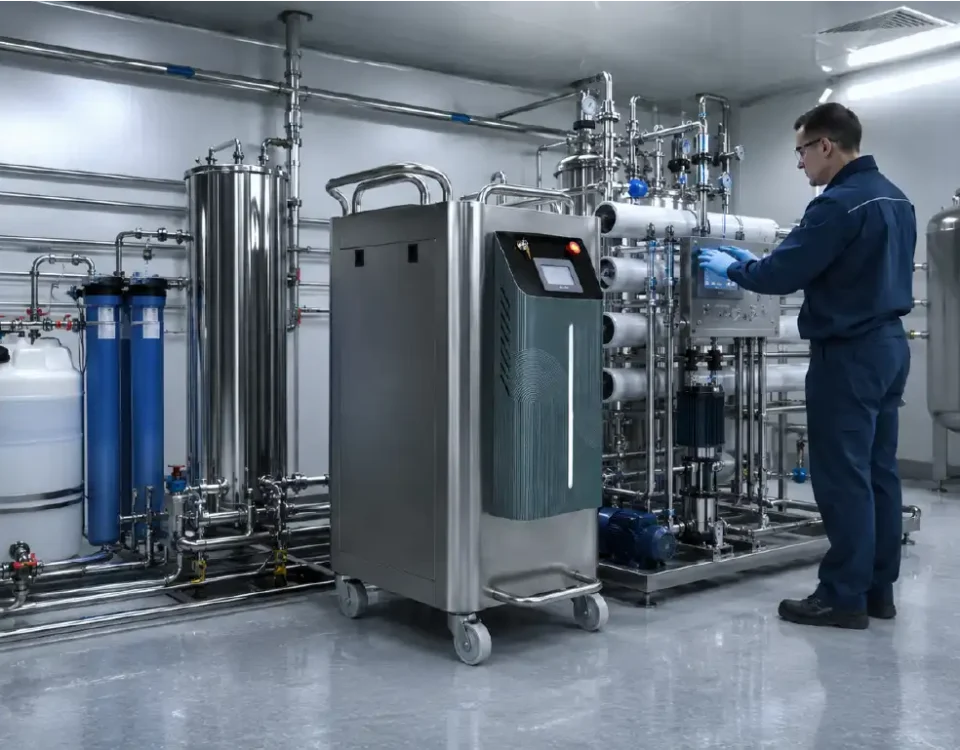
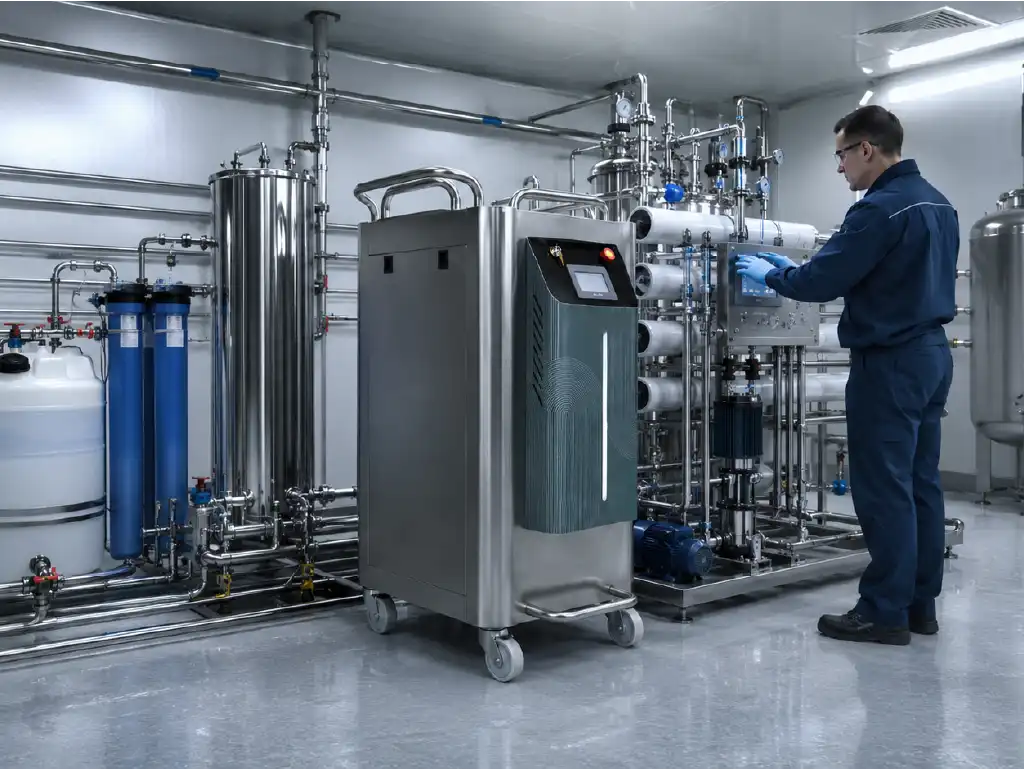
Pretreatment is the complete set of barriers that controls water before it reaches the RO membrane. If this section is not planned correctly, even the highest-quality membrane cannot maintain the expected performance. Hemodialysis raw water analysis determines which filters should be used and in what order, as well as flow capacity, tank volume, automation level, and maintenance scenario.
Pretreatment in a dialysis center should not consist only of a standard equipment list. Sand filters, activated carbon, softening, micron filtration, and, when necessary, UV or special filtration solutions should be sized according to the analysis report. This approach is important both for patient safety and for the long service life of the investment. Incorrectly selected pretreatment increases membrane cost, raises the risk of failure, and may affect treatment continuity.
Need for sand filter, activated carbon, and softening
A sand filter or multimedia filter forms the first protection line when water contains suspended solids, sediment, or turbidity. This filter reduces the particle load before RO and helps the following equipment operate more steadily. This stage is especially important in well water, municipal water from old pipelines, or sources with seasonal turbidity changes.
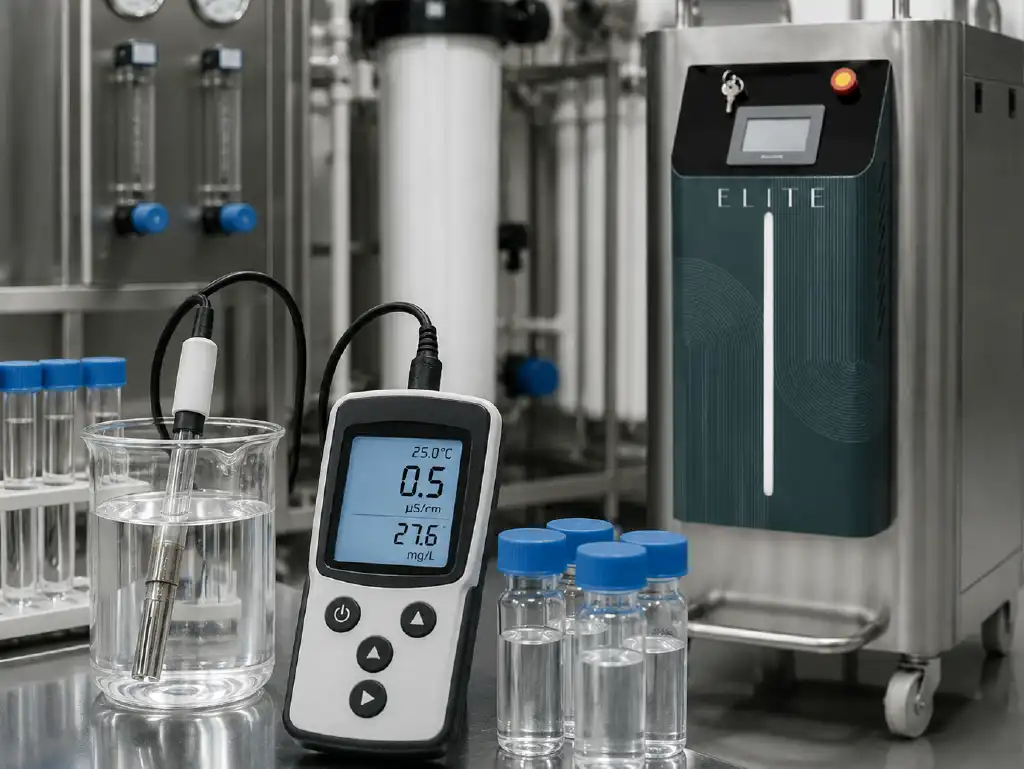
The activated carbon filter is used to control chlorine, chloramine, and organic compounds. In hemodialysis pretreatment systems, the function of the carbon filter is not only to remove odor and taste; the main goal is to protect the membrane from oxidative damage and control disinfection residuals that may pose a risk to patient safety. When selecting an activated carbon filter, flow rate, contact time, carbon type, and redundant operation principles should be evaluated together.
The softening system is a critical stage for membrane protection in projects with high hardness values. If calcium and magnesium ions are not removed, the risk of scaling on RO membranes increases. This may cause not only performance loss but also an increase in chemical cleaning requirements and a shorter membrane life. Therefore, the hardness value in the water analysis report for an RO system is the primary data for resin volume and regeneration cycle planning.
Choosing the correct pre-filtration for membrane protection
Membrane protection is not only about adding a micron filter. Correct pre-filtration includes particle control, chlorine removal, hardness reduction, iron and manganese management, pressure stability, and flow continuity. If SDI, turbidity, iron, manganese, and organic matter values are high in hemodialysis raw water analysis, a stronger filtration approach before the membrane may be required.
When selecting pre-filtration, the system’s peak flow demand should also be considered. In dialysis centers, flow demand increases during busy hours when all devices operate at the same time. If pressure drop occurs in the filters during this period, RO feed pressure may fluctuate. Therefore, filter diameter, valve structure, automatic backwash capacity, and service accessibility should be evaluated according to field conditions.
Expert note: A water analysis report alone is not sufficient; taking the sample from the correct point, with the correct container, and at the correct time is also important for reliable results. Especially for well water, tank outlet water, or pipelines where water remains stagnant for long periods, creating a periodic control plan instead of relying on a single analysis is a safer approach.
In Reinmeer projects, pretreatment design is shaped not only according to theoretical values but also according to field inspection and usage scenarios. The size of the technical room, drainage infrastructure, electrical capacity, existing tank structure, and maintenance access are considered in design decisions. Therefore, the technical support and site inspection process is an important step for the long-term reliability of the system.
The Role of Raw Water in the Single Pass or Double Pass Decision
The decision between Single Pass and Double Pass RO systems should not be made only according to budget or the number of devices. Hemodialysis raw water analysis forms the technical basis of this decision. The mineral load of the inlet water, TDS value, microbiological risk profile, seasonal variability, and the target safety level of the center should be evaluated together.
Single Pass RO systems can provide an economical, compact, and reliable solution under suitable municipal water and strong pretreatment conditions. On the other hand, Double Pass RO systems provide a stronger barrier in projects with high TDS, variable source water, well water, sensitive patient profiles, or a higher need for ultra-safe water. Therefore, hemodialysis raw water analysis is one of the most reliable decision bases when determining the system type.
Municipal water, well water, and variable source scenarios
In centers using municipal water, the source is usually more predictable because it has already undergone a certain level of treatment by the municipality. However, this does not always mean sufficient safety. Municipal maintenance works, pipeline changes, regional chlorination practices, and tank hygiene can affect raw water characteristics. For this reason, hemodialysis raw water analysis should be updated periodically even in centers using municipal water.
Well water is a more variable source. Mineral load, hardness, iron, manganese, nitrate, organic matter, and microbiological risks may vary significantly from one region to another. It is not correct to say that Double Pass is automatically required in every dialysis center using well water; however, analysis results and risk assessment often make a double-barrier design a strong option in many projects.
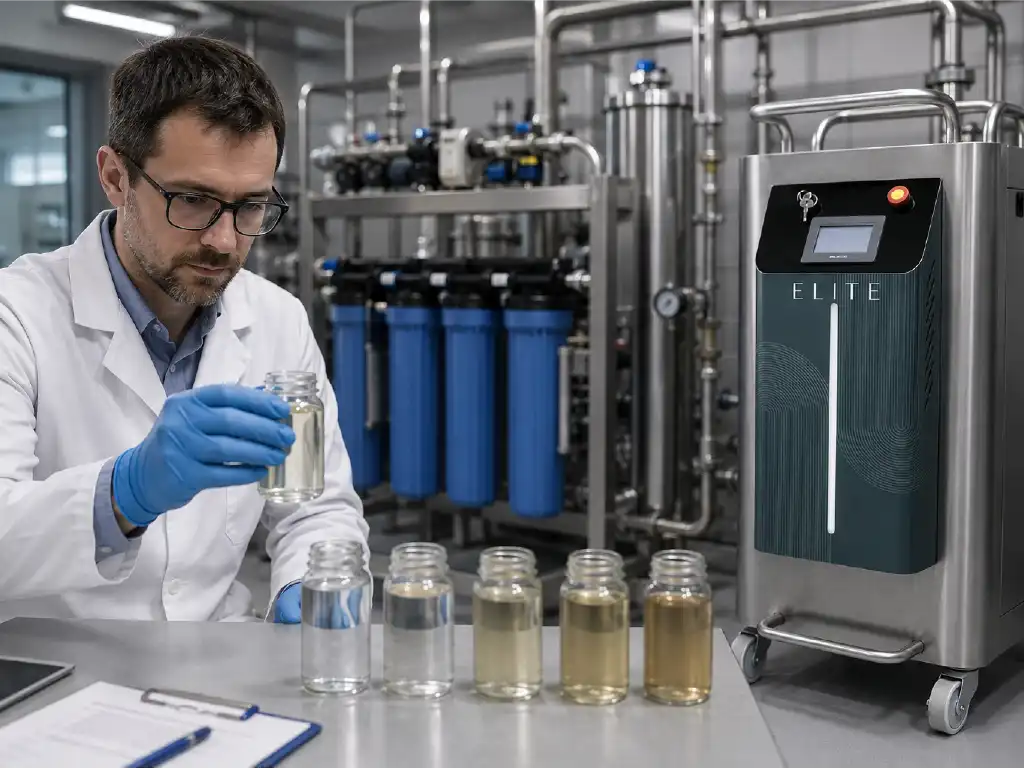
In variable source scenarios, for example when a facility uses municipal water in some periods and well water in others, the design should be based on the most challenging scenario. Otherwise, the system may operate successfully under normal conditions but experience alarms, conductivity deviations, or capacity loss when the water source changes. Therefore, hemodialysis raw water analysis should cover not only the current condition but also possible change scenarios.
Safe system design during seasonal changes
Water sources do not remain the same throughout the year. Rainy periods, drought, infrastructure work, changes in well levels, and municipal disinfection practices can affect raw water quality. These changes may be seen especially in TDS, turbidity, organic load, chloramine, and microbiological parameters. Safe system design should not be based only on the value measured on the analysis day; it should also consider the worst-case scenario that these fluctuations may create.
For this reason, dialysis water analysis should not be considered a one-time procedure performed only before installation. After installation, periodic control, product water conductivity monitoring, hardness testing, chlorine control, endotoxin testing, and microbiological analyses play an important role in system performance verification. The CDC resource also emphasizes the importance of microbiological testing, endotoxin control, and regular disinfection for dialysis water.
Reinmeer Hemodialysis water treatment systems can be configured with monitoring, alarm, automation, and technical support processes by considering such variations. In this way, the system does not only operate correctly on the first day; it also provides a safer operating foundation during intensive use, seasonal water changes, and maintenance processes.
Checklist for Reviewing a Raw Water Analysis Report
When reviewing an analysis report, looking at only a few basic values is not enough. Especially for hemodialysis raw water analysis, the scope of the report, sampling point, analysis date, and measurement methods should also be evaluated. Outdated, incomplete, or drinking-water-focused analyses may not provide sufficient technical data for RO design.
- The sample should be taken from the actual water source that will feed the system.
- Conductivity, TDS, pH, hardness, alkalinity, chlorine, chloramine, iron, and manganese values should be reviewed together.
- If well water is used, microbiological parameters and seasonal variation risks should be evaluated separately.
- If there is an existing tank or pipeline, the possibility of stagnation and contamination should be considered.
- Analysis results should be interpreted together with target capacity and the number of dialysis machines.
This checklist provides a strong framework for initial evaluation; however, final system selection must always be project-based. Hemodialysis pretreatment, RO capacity, loop line, storage approach, and disinfection plan are not independent components. Each one is a link in the same safety chain.
Frequently Asked Questions
Which water analyses are performed for a hemodialysis water system?
For a hemodialysis water system, conductivity, TDS, pH, hardness, alkalinity, iron, manganese, chlorine, chloramine, nitrate, organic load, microbiological parameters, and, when necessary, endotoxin analyses are evaluated. Additional parameters may also be requested depending on the source of the project.
If TDS is high in raw water, which RO system should be preferred?
If TDS is high in raw water, system selection should not be based only on this value; hardness, conductivity, flow requirement, and target water quality should be evaluated together. In many high-TDS scenarios, a Double Pass RO system may be a safer option.
Is Double Pass required in dialysis centers using well water?
In centers using well water, Double Pass often provides a strong safety advantage; however, the decision should be made by evaluating hemodialysis raw water analysis results, microbiological risk, TDS, hardness, and seasonal variability together.
Is it correct to select a system without water analysis?
No. Selecting a system without water analysis is technically risky. Without analysis, pretreatment capacity, membrane protection, Single Pass or Double Pass decision, and maintenance planning cannot be determined accurately.
How often should hemodialysis raw water analysis be repeated?
Analysis must be performed before installation, and after installation, a periodic control plan should be created according to the source type and field conditions. More frequent monitoring may be required in well water or variable municipal water conditions.
Determine the Right Hemodialysis Water Treatment Solution with Reinmeer
Choosing the right system is not done by simply selecting a model from a catalog; a reliable hemodialysis raw water analysis, site inspection, capacity calculation, and long-term operation plan should be evaluated together. Reinmeer Hemodialysis water treatment systems provide safe and sustainable solutions for dialysis centers by handling Single Pass, Double Pass, endotoxin filtration, pretreatment, and technical support processes on a project-specific basis.
Whether you are establishing a new center, renewing your existing system, or are unsure how to interpret your analysis results, you can receive support from an expert team. To determine the most suitable solution according to your system capacity, water source, number of devices, and quality targets, you can review Reinmeer Hemodialysis water treatment systems and submit your request for site inspection, quotation, or technical consultancy.