

Key Units That Make Up a Modern Dialysis Water Treatment System
May 4, 2026
How Is Chlorine and Chloramine Control Performed in Dialysis Water?
June 10, 2026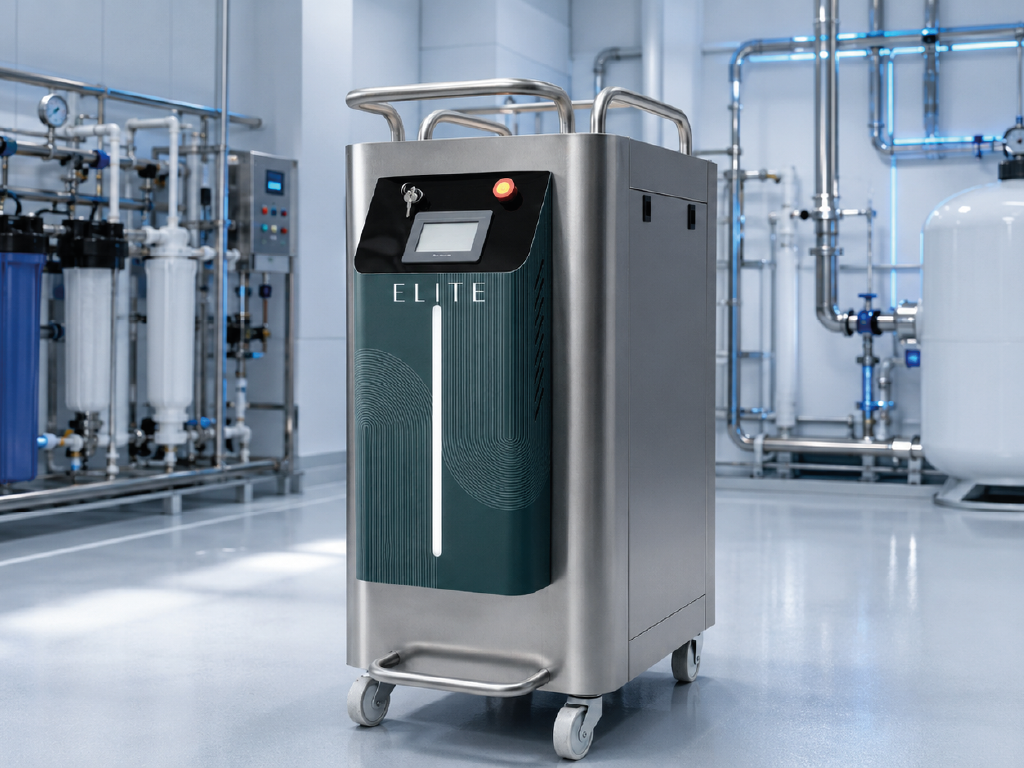
For hemodialysis service in a healthcare facility to continue safely, continuously, and sustainably, the water treatment infrastructure must be selected with the correct capacity. A Dialysis Water Treatment System is not only a group of equipment that purifies water; it is also a core infrastructure that directly affects treatment quality, dialysis machine performance, patient safety, and the daily operational flow of the facility. When capacity is calculated, looking only at the current number of dialysis machines is not enough. The number of machines operating at the same time, daily session intensity, patient capacity, backwash requirements, possible future expansion, and water consumption habits must all be evaluated together.
A wrong capacity decision may cause pressure drops, insufficient flow, and alarm problems in the short term, while in the long term it may lead to membrane wear, pump strain, unexpected downtime, and higher operating costs. For this reason, when determining the capacity of a Dialysis Water Treatment System, technical calculation, clinical demand, and business planning should be considered as one integrated process. In other words, Dialysis Water Treatment System capacity must be treated as both a clinical and engineering decision.
What Data Is Used in Dialysis Water Treatment System Capacity Calculation?
When determining the capacity of a Dialysis Water Treatment System, the first step is to understand the real water demand of the center. This need should not be calculated only through daily total water consumption; it should also be calculated through instantaneous flow demand. In dialysis centers, peak consumption often occurs at the beginning of sessions and during treatment when many machines are operating at the same time. If the system cannot meet this instantaneous load, fluctuations may occur in the water pressure reaching the dialysis machines.
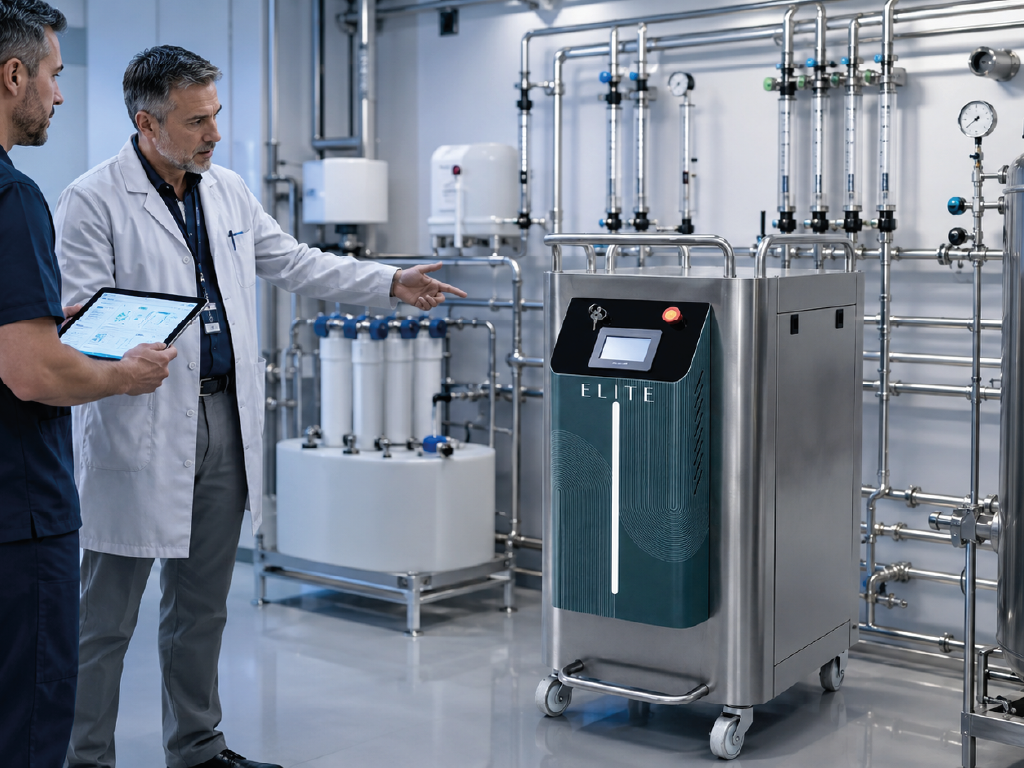
In capacity calculation, the amount of purified water required per dialysis machine, the number of machines actively operating at the same time, the water consumed during disinfection and preparation processes, the circulation requirement of the loop line, and the reserve tank volume are taken into account. Raw water quality also affects the calculation. The hardness, conductivity, chlorine level, organic load, and temperature changes of municipal water can influence system efficiency. Therefore, Dialysis Water Treatment System planning should not be based only on today’s patient number; it should also be based on the chemical characteristics of the water and the growth targets of the facility.
Dialysis Water Treatment System, number of dialysis machines and instant water demand
One of the main data points in capacity calculation for a dialysis center is the number of devices. However, the important point is not only the total number of machines, but how many machines will operate at the same time. For example, a center with 20 dialysis machines may operate 12 machines at certain hours, but all machines may need to work during peak session times. A Dialysis Water Treatment System must be designed to meet this highest demand scenario. The water need per machine may vary according to the model of the dialysis machine, the treatment prescription, and flow settings.
Therefore, when capacity is selected, the technical data of machine manufacturers, the working routine of the center, and the treatment protocols should be examined together. If instantaneous water demand is not calculated correctly, the system may look sufficient on paper but fail in real use. Especially when many devices operate at the same time, an undersized Dialysis Water Treatment System may struggle to keep pressure stable. This can lead to device alarms, treatment delays, and constant intervention by the staff. For peak hours, Dialysis Water Treatment System capacity should always be checked against the highest simultaneous demand.
| Evaluated Data | Effect on Capacity | Why It Matters |
|---|---|---|
| Number of dialysis machines | Determines instantaneous purified water demand | The Dialysis Water Treatment System must be able to feed all active devices at the same time |
| Number of active sessions | Affects daily total consumption | In high-volume centers, the system has less resting time |
| Raw water quality | Changes membrane efficiency | Poor raw water may require stronger pretreatment |
| Reserve tank volume | Balances short-term demand increases | Supports pressure and flow continuity |
| Future growth plan | Determines Dialysis Water Treatment System backup capacity requirement | If new devices are added, the system should not become insufficient |
Dialysis Water Treatment System, daily session density and patient capacity
Daily session count and patient volume must be included in the capacity calculation of a Dialysis Water Treatment System. Two centers with the same number of dialysis machines may have very different water requirements. One center may operate a single shift per day, while another center may provide service in three shifts: morning, noon, and evening. As the number of sessions increases, the working time of the system becomes longer, rest intervals decrease, and the load on the equipment increases. In this case, capacity should be evaluated not only according to instantaneous flow but also according to sustainable production power throughout the day.
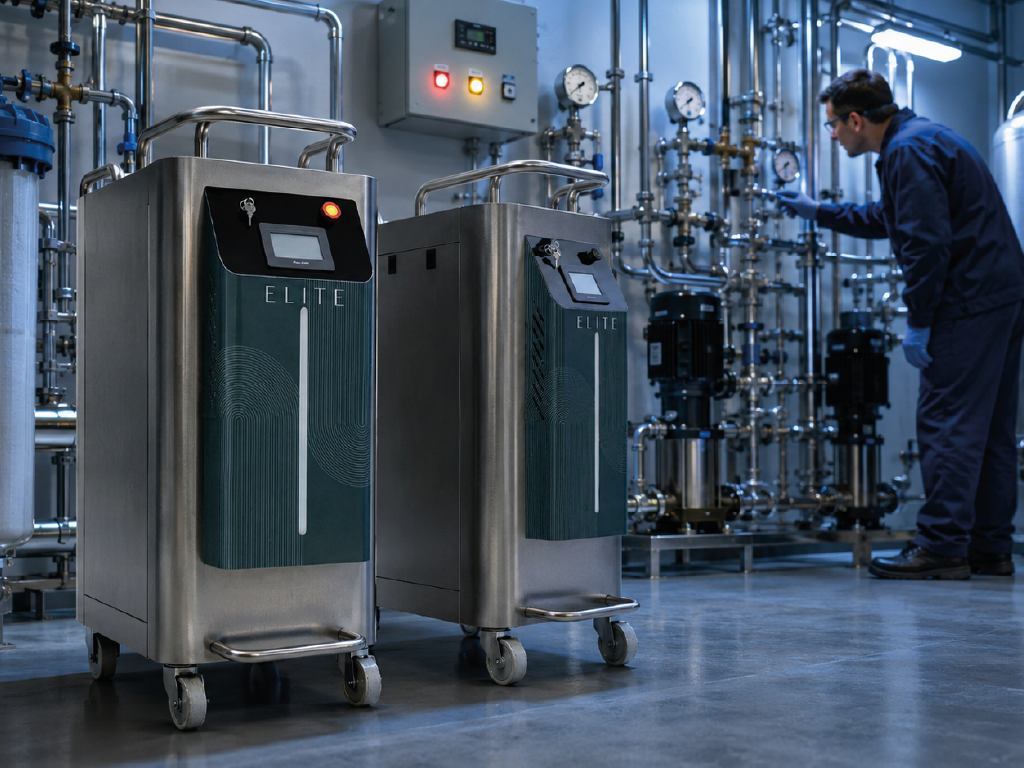
As patient capacity increases, the amount of water used for disinfection, preparation, rinsing, and maintenance also increases. For this reason, daily patient count, session intervals, shift planning, and staff workflow should be considered together when choosing a Dialysis Water Treatment System. Adding a safe capacity margin is a correct approach to prevent the system from struggling during peak hours, to keep the treatment flow organized, and to maintain stable water quality. This is why Dialysis Water Treatment System capacity planning should always include the busiest working scenario.
What Risks Does Insufficient Dialysis Water Treatment System Capacity Create?
An undersized Dialysis Water Treatment System may seem to provide a cost advantage during the initial installation, but over time it can create much larger operational and technical problems. In dialysis treatment, water continuity is a fundamental requirement for correct device operation and patient safety. When system capacity is low, water production cannot meet demand, pressure fluctuations occur, and dialysis machines may not receive the required flow. This should not be seen only as a technical failure, because it can lead to disrupted treatment planning, delayed sessions, and increased staff workload.
If the system has to operate continuously at maximum capacity, pumps, membranes, filters, and control equipment wear out faster. This increases the frequency of maintenance and raises the risk of unexpected downtime. An incorrectly designed Dialysis Water Treatment System can also limit the future growth potential of the center. When the facility wants to add new dialysis machines or increase patient capacity, a complete system renewal may become necessary. In such cases, poor Dialysis Water Treatment System capacity planning becomes a long-term operational risk.
Dialysis Water Treatment System pressure drop and insufficient flow problems
Pressure drop is one of the earliest visible signs of insufficient capacity selection. Dialysis machines operate properly within a certain water pressure and flow range. If a Dialysis Water Treatment System cannot provide this requirement consistently, alarms may occur on the machines, treatment preparation may take longer, and interruptions may happen during sessions. Especially during peak hours, when the number of simultaneously operating machines increases, the weak points of the system become more visible. Insufficient flow can create problems not only on the device side but also in loop line circulation.
If enough circulation cannot be maintained in the loop line, it becomes difficult for water to move through the system at the desired speed, and stagnant areas may appear. This is also negative from a hygiene management perspective. A correctly sized Dialysis Water Treatment System meets the flow demand and keeps pressure balanced, helping the dialysis machines operate more calmly and consistently. This creates a more predictable working environment for both technical and clinical teams. Therefore, Dialysis Water Treatment System capacity directly affects pressure stability and daily treatment comfort.
Dialysis Water Treatment System strain and treatment continuity risk
If a Dialysis Water Treatment System constantly operates at its limit, even a small performance loss in any component can affect the entire process. For example, if membrane efficiency decreases, pretreatment filters become clogged, or pump performance drops, the already limited capacity margin can quickly disappear. This creates a serious risk for treatment continuity. In dialysis centers, a water treatment system stoppage is usually not a simple issue that only the technical service team needs to handle; it can affect the entire session schedule of the center.
When the system is strained, energy consumption may increase, equipment may heat up more, and maintenance needs may become more frequent. If staff must constantly monitor alarms, operational efficiency also decreases. A Dialysis Water Treatment System designed with safe capacity can operate more flexibly even during unexpected peak demand. This flexibility supports regular patient appointments and helps protect the service reliability of the center. A well-sized Dialysis Water Treatment System protects the facility against sudden load changes and technical stress.
What Does Correct Dialysis Water Treatment System Capacity Selection Contribute to Operations?
A correctly sized Dialysis Water Treatment System is not only a technical solution that meets today’s need; it is also a strategic investment that supports the long-term sustainability of the facility. When capacity is planned correctly, the system operates in a more balanced way, the equipment is not overloaded, and water quality is managed more consistently. This reduces the risk of failure and makes maintenance planning more predictable.
Adequate capacity also helps the center operate comfortably during busy session hours. Staff spend less time dealing with water pressure, device alarms, or flow insufficiency, so clinical workflow becomes more organized. A properly selected Dialysis Water Treatment System also provides an advantage for centers planning to increase the number of devices in the future. If the system is installed from the beginning with a reasonable growth margin rather than only the minimum requirement, future capacity increases can be managed more easily. This reduces the need for repeated investment and improves planning security. Correct Dialysis Water Treatment System capacity also supports future growth without forcing the center into premature replacement.
Dialysis Water Treatment System, more stable water quality and longer equipment life
Maintaining stable water quality is one of the most important technical goals in dialysis service. When a Dialysis Water Treatment System is selected with the correct capacity, system components operate under a more balanced load. Membranes, pumps, prefilters, softening units, and carbon filters can maintain their performance for a longer period because they are not continuously overloaded. In systems working under excessive load, filter replacement intervals may become shorter, membrane fouling may accelerate, and fluctuations may be seen in water values. In contrast, a Dialysis Water Treatment System with sufficient capacity provides a more stable flow on both the production and circulation sides.
Stable flow and pressure positively affect dialysis machine operation and also make water quality monitoring easier. The technical team can interpret changes in values more clearly and make maintenance decisions at the right time. This helps extend equipment life and reduce unexpected service costs. In this way, Dialysis Water Treatment System capacity supports both water quality stability and equipment durability.
Dialysis Water Treatment System and efficient operating cost
From an operating cost perspective, a correctly sized Dialysis Water Treatment System provides a more economical solution in the long term. Choosing minimum capacity to reduce the initial investment cost may look attractive, but this approach often returns as maintenance, energy, spare part, and downtime costs. When the system operates continuously at maximum power, energy consumption may increase and equipment may wear faster. In contrast, a Dialysis Water Treatment System operating with capacity suitable for real need creates a more efficient working cycle.
Filters and membranes are used more evenly, pumps are not unnecessarily strained, and the probability of failure decreases. Sessions can proceed without delay, and staff time can be used more efficiently. For a healthcare operation, efficiency is not limited to electricity or consumable usage; patient satisfaction, appointment order, technical service planning, and device life are also parts of the cost. Therefore, capacity selection should be evaluated according to total cost of ownership, not only short-term price. A properly sized Dialysis Water Treatment System helps the facility control technical and operational expenses over time.
| Contribution of Correct Dialysis Water Treatment System Capacity Selection | Operational Effect |
|---|---|
| Stable pressure and flow | Helps dialysis machines operate more consistently |
| Less equipment strain | Supports pump, membrane, and filter life |
| Easier planned maintenance | Reduces the risk of unexpected downtime |
| Growth flexibility | Adapts to new device and patient capacity increases |
| Efficient resource use | Balances energy, consumable, and service costs |
When determining the capacity of a Dialysis Water Treatment System, the healthiest approach is to consider not only the current condition of the center but also its future working routine. If a center currently operates with 10 dialysis machines but plans to expand to 15 or 20 devices, the system should be designed to support that growth. Likewise, if patient volume increases seasonally, the system must meet not only average consumption but also the most intense scenario.
Leaving a safe margin in capacity calculation does not mean installing an unnecessarily large system. The purpose is to ensure that the system can meet daily needs and also operate safely during unexpected load increases. A well-planned Dialysis Water Treatment System handles purified water production, storage, distribution, and return line circulation as a whole.
When this integrity is achieved, water quality can be monitored more carefully, devices are supplied more evenly, and the facility can manage daily operations more safely. As a result, capacity selection is much more than a technical calculation; it is one of the main decisions that determines service quality. For this reason, Dialysis Water Treatment System capacity should be reviewed whenever the center’s device count or patient volume changes.
Professional site assessment and the right engineering approach provide major advantages during capacity planning. Raw water analysis, device count, session density, loop line length, storage requirement, and backup scenarios should be evaluated together.
Decisions made without this evaluation may create serious difficulties for the facility in the future. For this reason, when investing in a Dialysis Water Treatment System, a project-specific approach should be preferred instead of selecting a standard product. Each center has a different water source, patient volume, building infrastructure, and growth target.
When these differences are considered, the system becomes longer lasting, more stable, and more efficient. Correct project design is not limited to installation; system traceability, maintenance access, hygiene management, and technical service access should also be part of the plan.
In this way, the Dialysis Water Treatment System becomes an infrastructure that provides confidence in daily operation, supports treatment continuity, and keeps operating costs under control. A project-specific Dialysis Water Treatment System provides a safer foundation for future operational decisions.
If you want to plan a reliable and long-lasting Dialysis Water Treatment System with the right capacity for your center, the first step is to analyze your needs correctly. Your number of devices, daily session intensity, patient capacity, raw water values, and growth targets should be evaluated together to define the most suitable system architecture.
Professional support helps you find a solution that meets today’s need and prevents problems when future capacity increase is required. To learn more about correct project design, quality equipment selection, and a reliable technical approach in hemodialysis water treatment, visit hemodialysis water treatment. With the right information, you can make more informed decisions about center-specific solutions, system planning processes, and technical evaluation.
A correctly selected Dialysis Water Treatment System supports treatment continuity, protects equipment life, and makes the daily flow of your facility safer. If you are opening a new center, renewing your existing system, or wondering whether your current capacity is sufficient, getting an expert evaluation provides an important long-term advantage. With the right Dialysis Water Treatment System capacity, the center can operate with greater confidence and continuity.
Meta Description: How is Dialysis Water Treatment System capacity determined? Learn how device count, session density, flow demand, patient capacity, and correct capacity selection affect dialysis operations.