



What is Biofilm? How Does It Form and How Can It Be Prevented?
February 18, 2026
Why is Ultra Pure Dialysis Water Important? Its Critical Role in Patient Safety and Treatment Quality
February 18, 2026
Hemodialysis Water Purification Systems are one of the most critical infrastructure components of modern hemodialysis treatment. During hemodialysis, the patient’s blood indirectly comes into contact with large volumes of water, and therefore, the purity of the water used directly determines patient safety. At this point, Hemodialysis Water Purification Systems are not just technical purification equipment, but the fundamental building block of clinical safety.
A hemodialysis patient is indirectly exposed to approximately 20,000 liters of water per year. Even the smallest microbiological or chemical contamination in such a high volume of water can lead to serious complications. For this reason, Water Purification Systems must be designed and continuously monitored in accordance with international standards.
When properly configured, Water Purification Systems improve treatment quality, reduce the risk of inflammation, and ensure long-term patient safety.
Why Are Hemodialysis Water Purification Systems Critically Important?
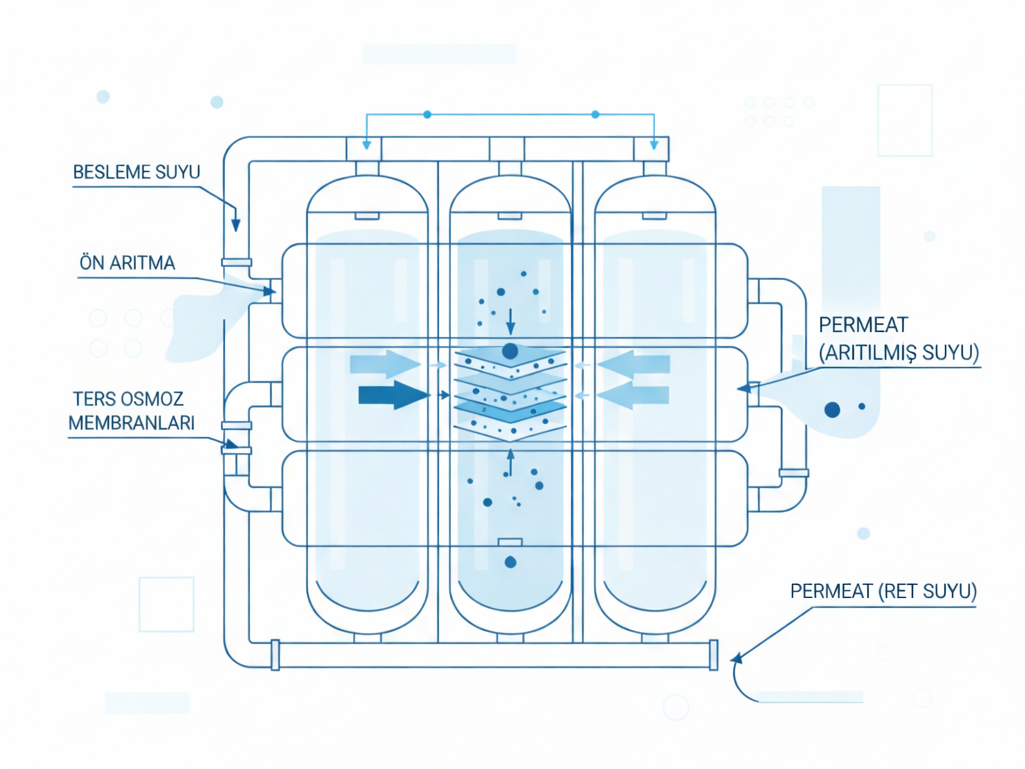
Hemodialysis Water Purification Systems bring the water, which is the main component of the dialysate, to a high level of purity. Approximately 95% of dialysate is water, and therefore, water quality directly affects treatment effectiveness. Standard tap water contains dissolved minerals, heavy metals, bacteria, and endotoxins. If these substances are used without purification, they pose serious clinical risks.
Advanced Water Purification Systems remove chemical and microbiological contaminants through multi-stage filtration processes. These systems not only purify the water but also guarantee continuous quality.
Reverse Osmosis Technology in Hemodialysis Water Purification Systems
The most critical stage in modern Hemodialysis Water Purification Systems is reverse osmosis filtration. Reverse osmosis membranes are semi-permeable and remove dissolved ions, bacteria, and endotoxins with high efficiency.
Hemodialysis Water Purification Systems typically consist of the following purification stages:
- Pre-filtration
- Carbon filtration
- Water softening
- Reverse osmosis membranes
- Ultrafiltration
- Disinfection
Thanks to this multi-stage structure, Water Purification Systems simultaneously ensure both chemical and microbiological safety.
Single Pass Hemodialysis Water Purification Systems
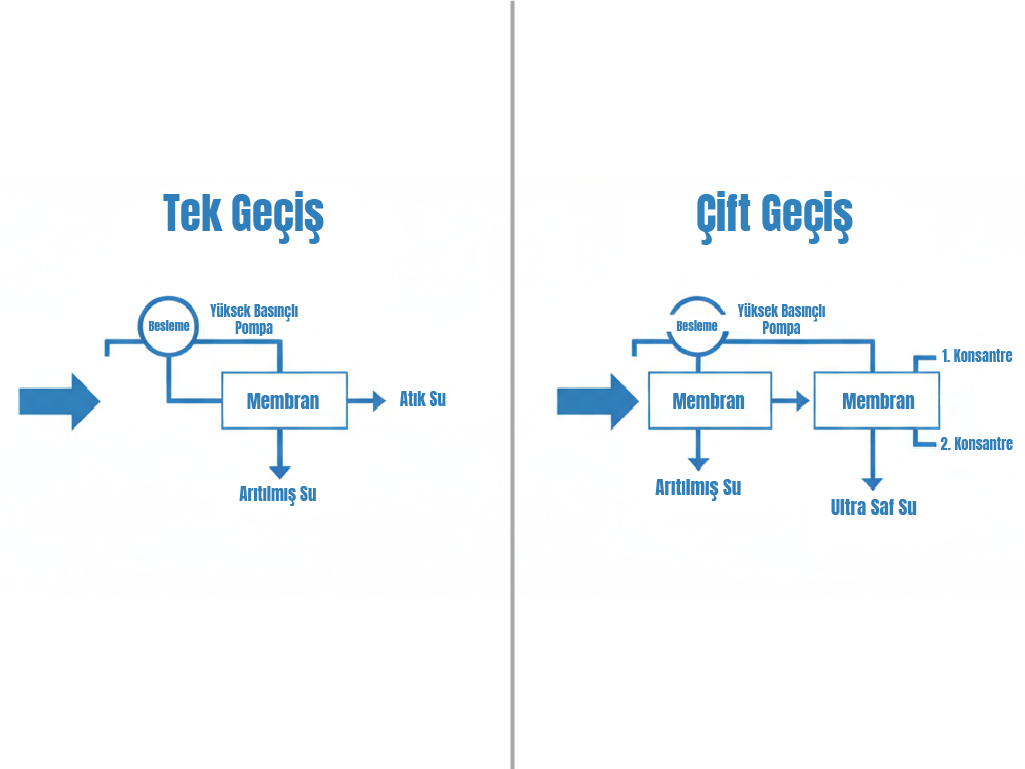
Single pass Water Purification Systems are based on the principle of passing water through a reverse osmosis membrane only once. These systems have been used in standard dialysis centers for many years.
Advantages of single pass Hemodialysis Water Purification Systems:
- Lower investment cost
- Lower energy consumption
- Sufficient performance for standard patient profiles
However, for high-risk patient groups, single pass Hemodialysis Water Purification Systems may be limited in terms of microbiological safety.
Double Pass Hemodialysis Water Purification Systems
Double pass Water Purification Systems allow water to pass through two separate reverse osmosis stages. The water from the first filtration is directed to the second membrane group.
Thanks to this structure, Water Purification Systems further reduce conductivity and minimize endotoxin levels.
Advantages of double pass Water Purification Systems:
- Very high microbiological safety
- Easy access to ultra-pure water standards
- Stable performance for high patient density
Single and Double Pass Comparison
| Criterion | Single Pass | Double Pass |
|---|---|---|
| RO Stage | 1 | 2 |
| Microbiological Safety | Good | Very High |
| Ultra-Pure Water | Conditional | High Suitability |
| Investment Cost | Lower | Higher |
Ultra-Pure Dialysis Water and Clinical Effects
Advanced Dialysis Water Purification Systems are designed to produce ultra-pure water. Ultra-pure dialysis water has extremely low levels of bacteria and endotoxins.
Water Purification Systems using ultra-pure water provide the following clinical advantages:
- Reduced inflammation
- Decreased risk of pyrogenic reactions
- Reduced cardiovascular complications
- Increased patient comfort
International Standards
Water Purification Systems must comply with ISO and AAMI standards. These standards clearly define microbiological and chemical limits.
Water Purification Systems that comply with standards must be controlled through regular validation and analyses. Continuity of performance is essential for patient safety.
Considerations for System Design
When designing Water Purification Systems, center capacity, tap water quality, and future growth plans must be taken into account.
- Number of patients
- Daily session capacity
- Water analysis values
- Energy efficiency
- Modular design
Properly planned Water Purification Systems provide long-term cost advantages.
Maintenance and Validation
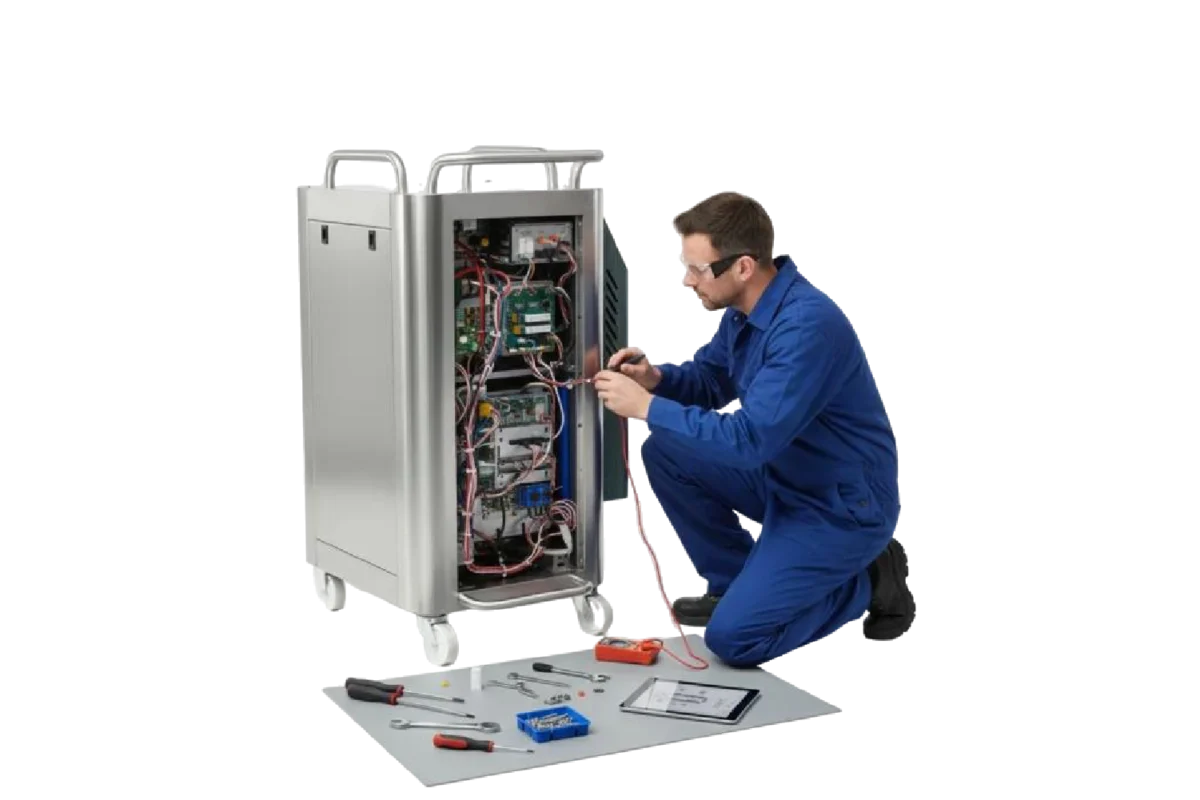
Water Purification Systems require regular maintenance. Membrane replacement, disinfection, and performance tests must not be neglected.
Professionally maintained Water Purification Systems have a longer lifespan and ensure continuous quality.
Conclusion
Water Purification Systems are an indispensable infrastructure for modern hemodialysis treatment. Properly configured Water Purification Systems provide not only technical performance but also clinical safety.
When choosing between single pass or double pass, patient safety, international standards, and long-term sustainability must be considered.
Summary:
- Water Purification Systems are critical for patient safety
- Ultra-pure water reduces the risk of inflammation
- Double pass systems provide maximum safety
- Regular maintenance is essential for continuous performance
Professional Hemodialysis Water Purification System Solution
You can enhance patient safety and operational efficiency for your center with high-performance Water Purification Systems. Turnkey solutions, including project design, installation, validation, and technical support, are offered. hemodialysiswaterpurification.com